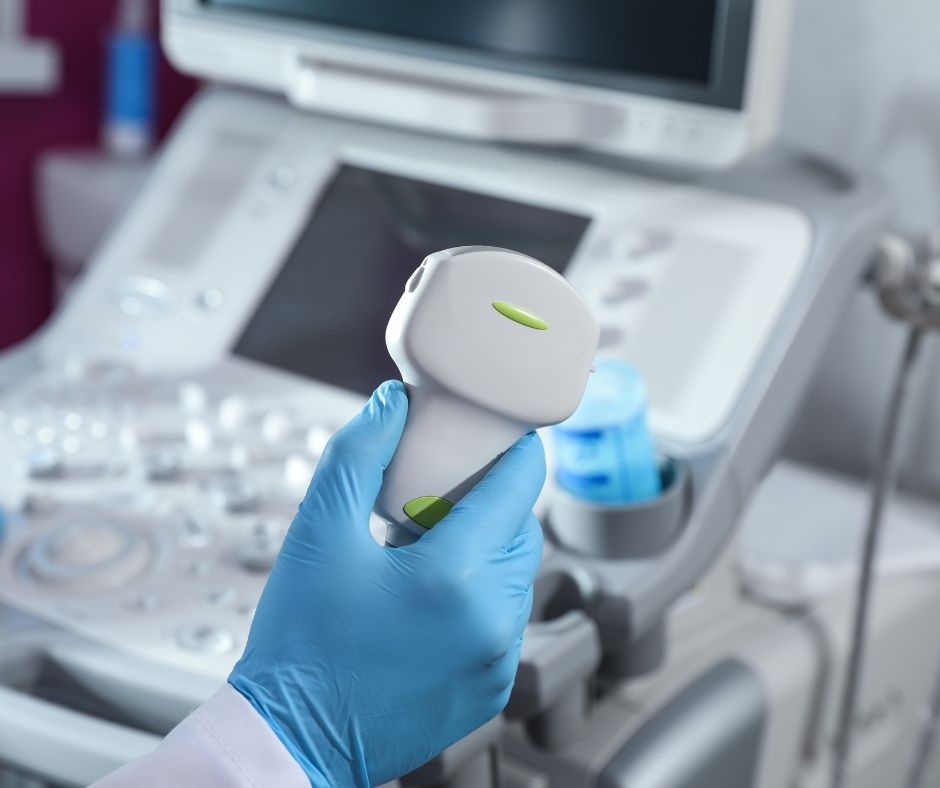
What does the examination involve?
An ultrasound examination is non-invasive and painless. The patient is not exposed to radiation, and the risk of internal organ damage from ultrasound waves is negligible. The examination allows real-time imaging, precise measurement of organs, and determination of their shape, size, and depth of location. Ultrasound can be repeated multiple times on the same person. Thanks to an ultrasound examination, a doctor can detect disease-related and pathological changes in internal organs early enough.
What examinations are performed using the ultrasound method?
Abdominal ultrasound. The patient should be fasting (the last meal can be taken about 6 hours before the examination). Chewing gum, drinking coffee, or smoking should also be avoided. About 2 hours before the examination, drink approximately 1-1.5 liters of still water and do not urinate. Patients who are prone to bloating should also follow a light diet for two days prior to the examination, and on the day before the test, take Espumisan or another anti-bloating medication 3 times a day, 3 to 4 capsules. Patients taking medication should take it as recommended by their doctor, with still water, but no later than 1 hour before the examination. People with diabetes must remember their insulin (drink a glass of sweet beverage before taking insulin). During an abdominal ultrasound, the bladder should be full — which helps the doctor better visualize the reproductive organs/prostate gland and the bladder itself.
For a transvaginal/transrectal examination, to avoid discomfort, it is recommended to empty the bladder about half an hour before the examination. Other ultrasound examinations (thyroid, breast, lymph nodes, testicles) require no special preparation. For each examination, you should always bring a current referral and the results of previous diagnostic tests.